Conjunctivitis
Conjunctivitis is one of the most common causes of an uncomfortable red eye. It is
characterized by inflammation of the conjunctiva, which can be caused by bacteria,
viruses, Chlamydia, or allergies.
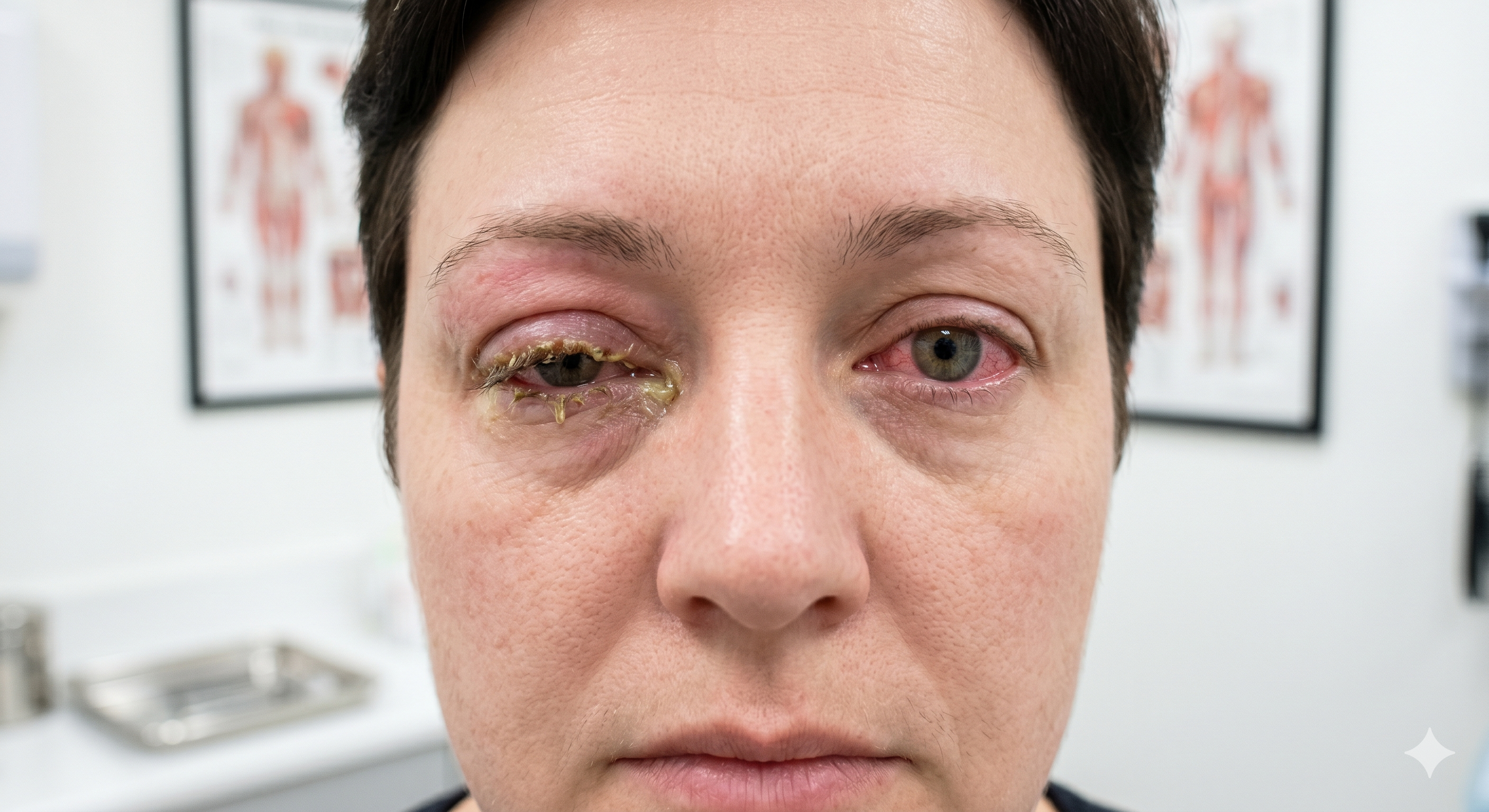
1. Bacterial Conjunctivitis
● Symptoms: Discomfort and a purulent or mucopurulent discharge in one eye
that typically spreads to the other.
● Signs: Uniform engorgement of all conjunctival blood vessels (generalized
injection).
● Key Feature: The eyelids may be “stuck together” in the morning due to the
discharge.
Management
Topical antibiotic eye drops, such as chloramphenicol, should be instilled every two hours for the first 24 hours to hasten recovery.
● The frequency of the drops should then be decreased to four times a day for one
week.
● Chloramphenicol ointment can be applied at night to increase comfort and
reduce the stickiness of the eyelids in the morning.
● Patients should be advised on general hygiene measures, such as not sharing
face towels.
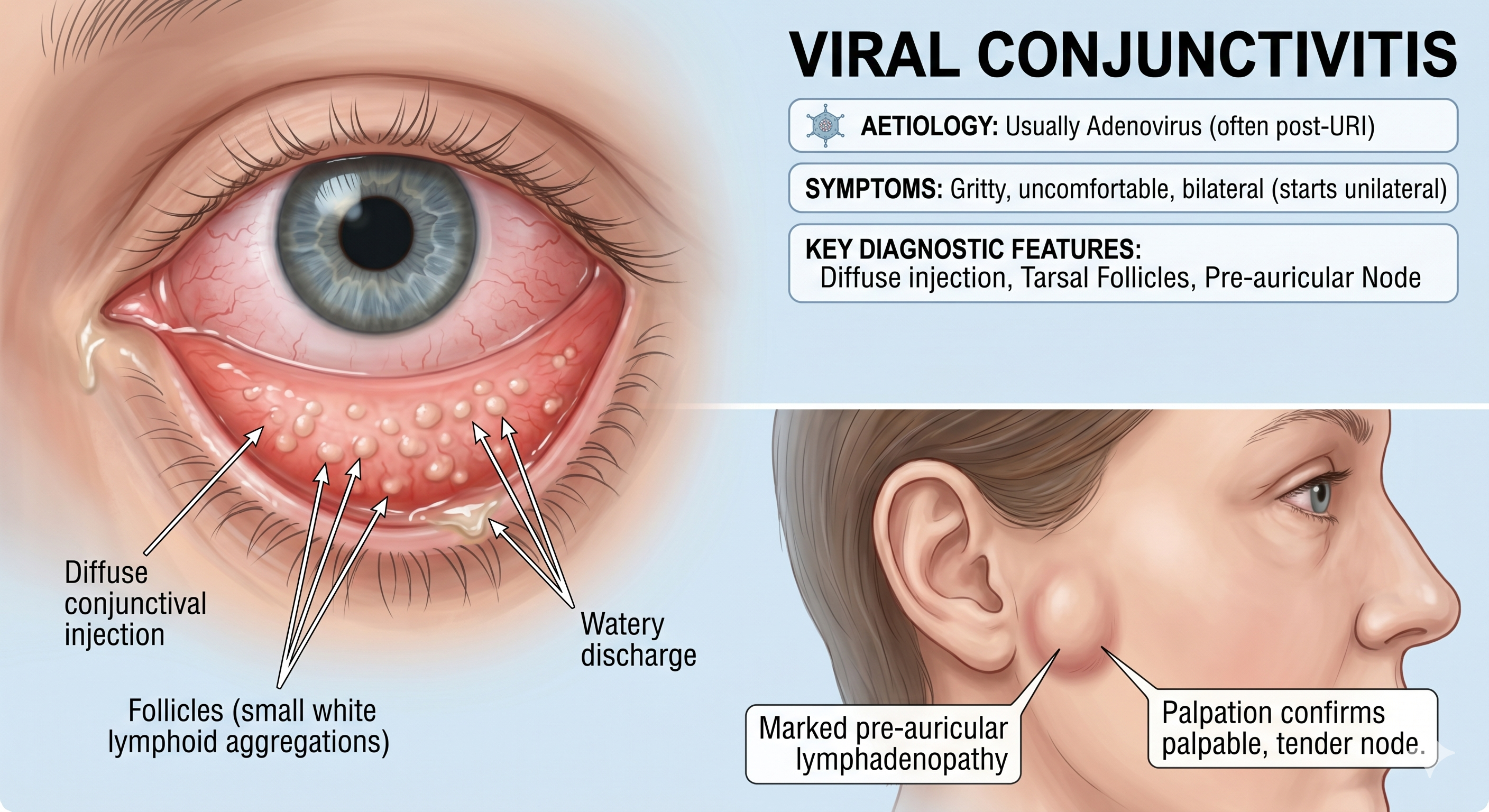
2. Viral Conjunctivitis
● Aetiology:
Usually caused by an adenovirus and often associated with upper
respiratory tract infections.
● Symptoms
Both eyes typically feel gritty and uncomfortable with a watery
discharge
.
● Signs
Diffuse conjunctival injection and the presence of small white lymphoid
aggregations called follicles.
● Physical Exam
Often associated with marked pre-auricular lymphadenopathy.
● Management:
This form of conjunctivitis is generally a self-limiting condition. Antibiotic eye drops
(e.g., chloramphenicol) can be used to provide symptomatic relief and help prevent
secondary bacterial infection .Because viral conjunctivitis is extremely contagious, strict hygiene measures, such as washing hands and sterilizing instruments, are important for both the patient and the doctor.
Patients should be warned that the infection may last for several weeks.
In chronic cases with persistent corneal lesions and symptoms, steroid eye drops may be indicated, but these must only be prescribed with continuous ophthalmological supervision due to the danger of causing a cataract or irreversible glaucoma.
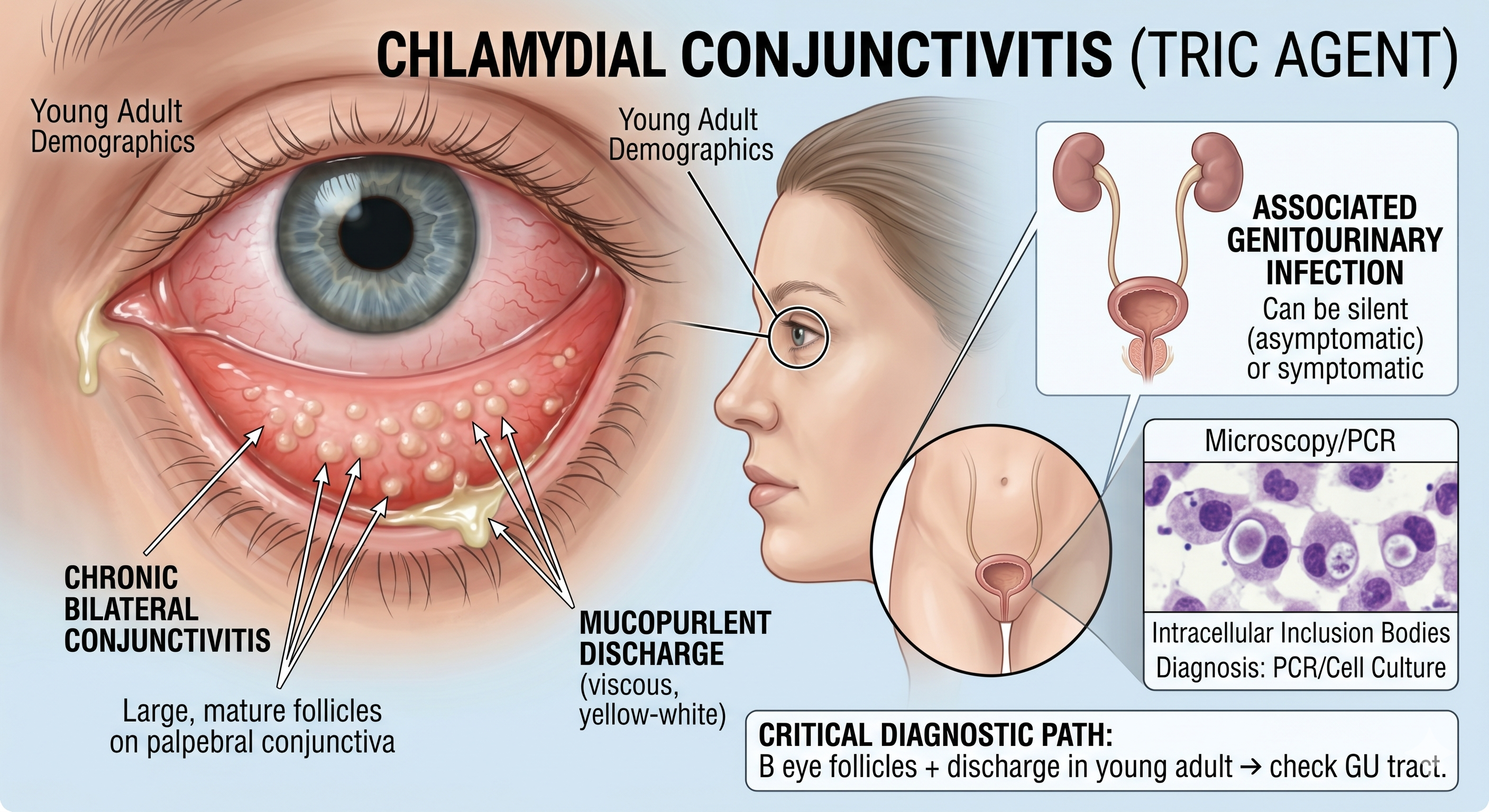
3. Chlamydial Conjunctivitis
● Demographics: Usually affects young adults.
● Clinical Presentation: A chronic bilateral conjunctivitis with a mucopurulent
discharge and follicles.
● Important Consideration: It is often associated with a silent or symptomatic
genitourinary infection.
● Management:
Treatment consists of oral tetracycline or a derivative for at least one month .Systemic tetracycline should not be used in children or pregnant women because it can affect developing bones and teeth.
Any associated venereal disease must be treated, and it is important to check the patient’s partner for symptoms or signs of venereal disease.
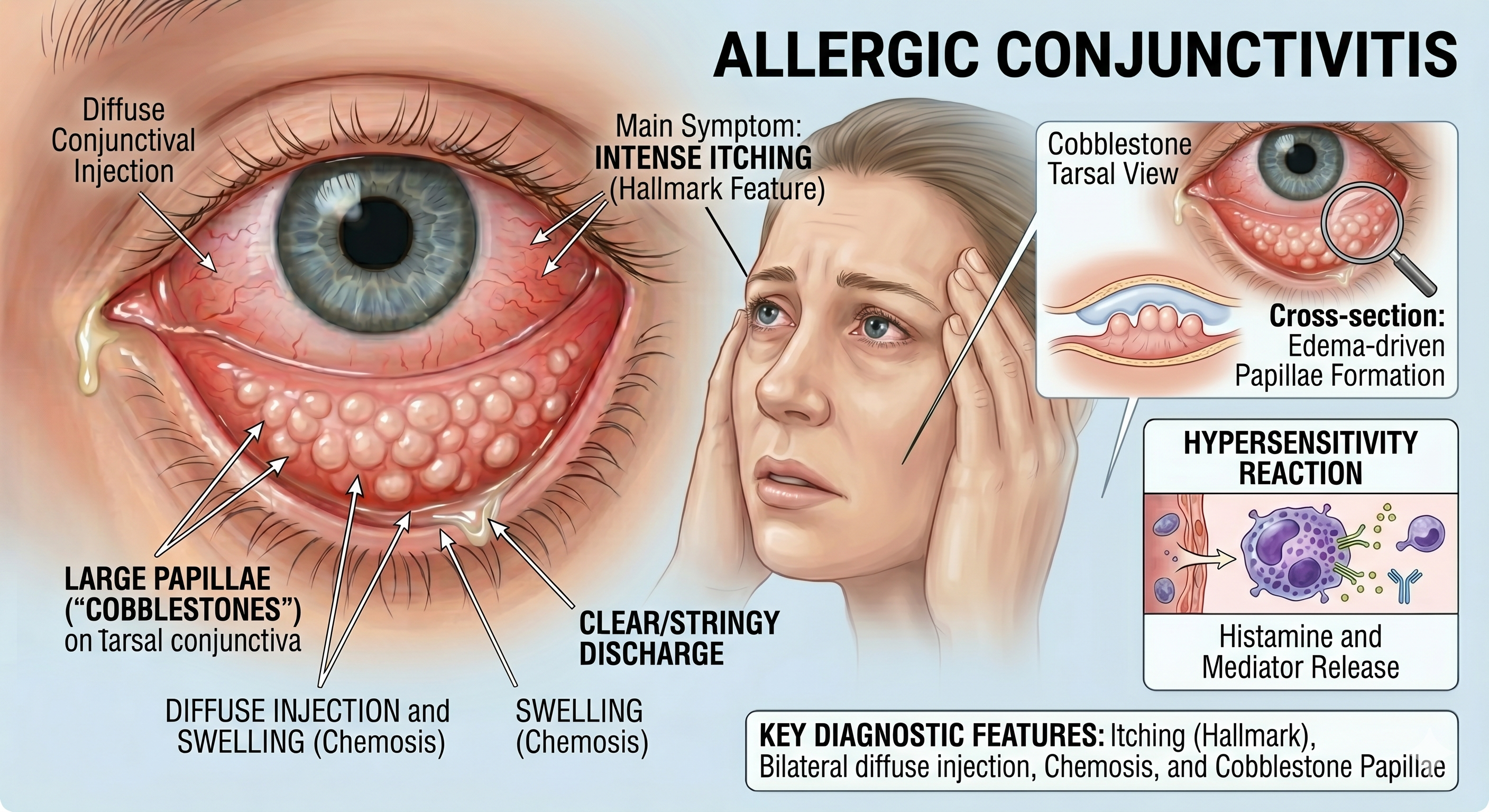
4. Allergic Conjunctivitis
● Main Symptom: Intense itching is the hallmark feature
.
● Signs: Both eyes are usually affected, showing diffuse injection, a clear/stringy
discharge, and swelling of the conjunctiva (chemosis). Specific Structures: Edema results in round swellings on the tarsal conjunctiva known as papillae; when these are large, they are referred to as “cobblestones”.
● Management
Topical antihistamine and vasoconstrictor eye drops provide short-term relief.
Eye drops that prevent the degranulation of mast cells are also useful, though they may need to be used for several weeks or months to achieve maximal effect.
Oral antihistamines may be used, particularly newer compounds that cause less
sedation.
Topical steroids are effective but should not be used without regular ophthalmological supervision due to the risk of steroid-induced cataracts and glaucoma.
Intensive treatment with broad-spectrum antibiotic drops and ointment (or
subconjunctival injections to increase local drug concentration) is initiated until organism sensitivities are known.
Topical antiviral therapy is indicated for herpetic infections.