Glucoma
Glaucoma is a group of ocular disorders characterized by a characteristic type of progressive optic neuropathy (damage to the optic nerve) and associated visual field loss. It is the leading cause of irreversible blindness worldwide and the second most common cause of blindness overall.
The disease process is most often linked to the dynamics of aqueous humor, the fluid that fills the front of the eye.
Pathophysiology and Anatomy
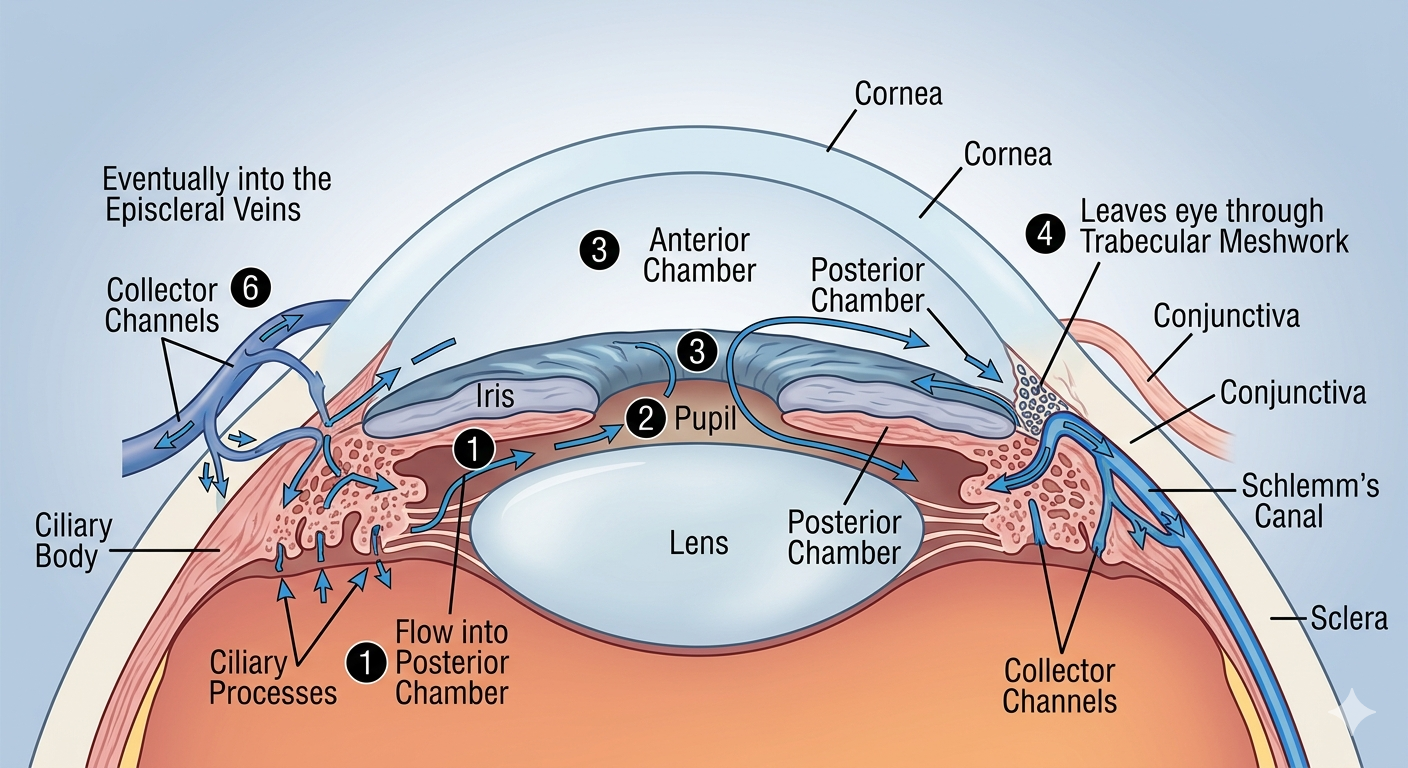
Under normal physiological conditions:
- The ciliary body secretes aqueous humor.
- The fluid flows into the posterior chamber, through the pupil, and into the anterior chamber.
- It leaves the eye through the trabecular meshwork, flowing into Schlemm’s canal and eventually into the episcleral veins.
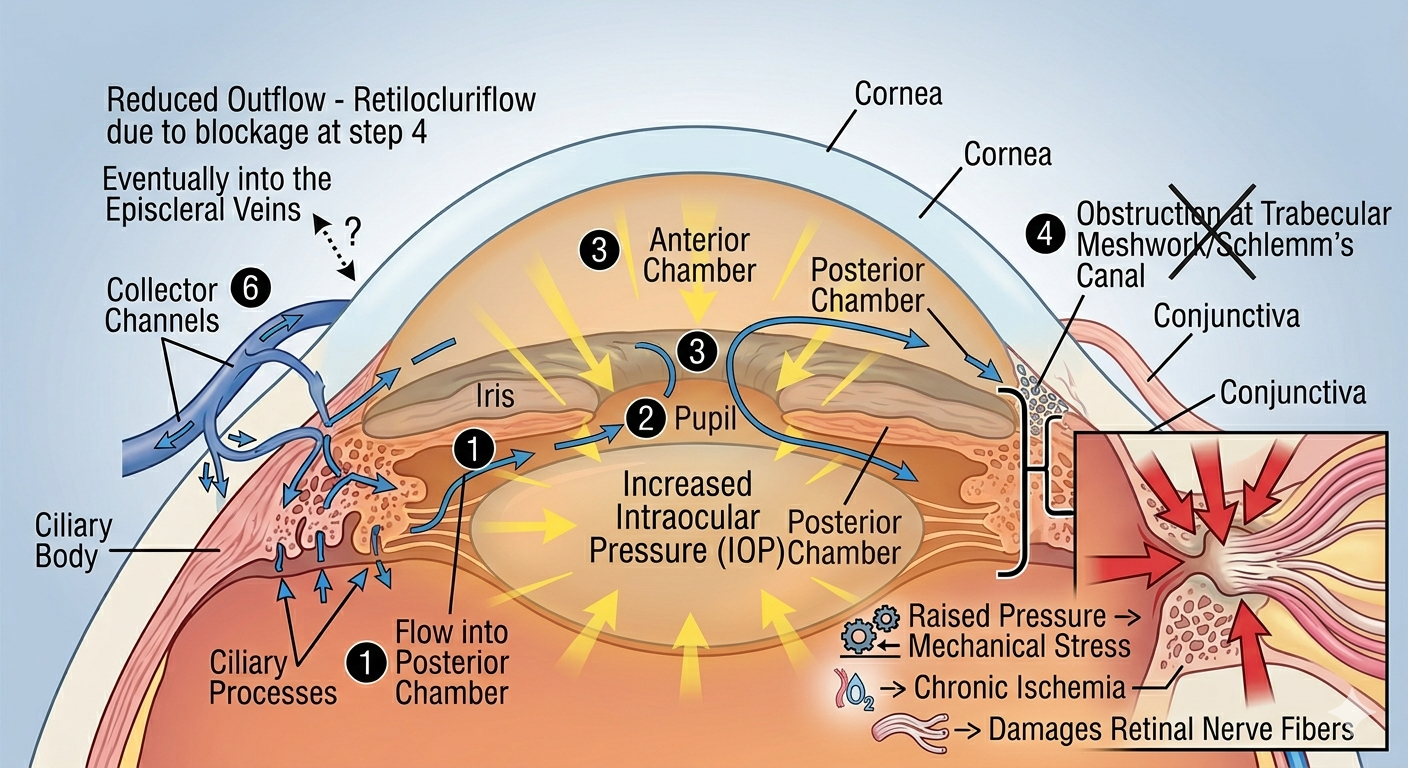
In glaucoma, this flow or drainage is obstructed, typically leading to an increase in intraocular pressure (IOP). This raised pressure exerts mechanical stress and causes chronic ischemia at the optic nerve head, damaging the retinal nerve fibers
.
Clinical presentation
The clinical presentation of glaucoma varies significantly depending on the type and the rate at which intraocular pressure (IOP) rises. Below is the clinical presentation categorized by the major types of the disease as found in the provided resources.